The Real Reason Founders Haven’t Hired You
If you’re asking how to become a fractional executive that premium founders quickly trust, this guide walks through a practical, founder-first approach to fractional leadership.
Imagine this scenario: You walk into a room full of scaling business founders and simply ask them, “Why haven’t you hired a fractional executive yet?”.
If you are currently struggling to fill your client pipeline, you might naturally expect their answers to revolve around tight budgets. You might assume they would say, “We simply can’t afford it right now,” or “We are waiting to build out our full-time team,” or “We don’t know how to make a part-time leader work.”
But let me pull back the curtain on the actual B2B marketplace. The real answer is something else altogether. It is not about cost, and it is not just about the budget; it is fundamentally about clarity, context, and credibility.
Founders across major economic hubs—whether they are running heavily-funded tech startups in Silicon Valley, dynamic e-commerce brands in Austin, or established mid-market firms in Chicago—are rapidly shifting their operational models. They have moved past the outdated “go-go-go” days of assuming every problem requires a full-time hire. Today, they are aggressively embracing lean structures, remote models, and highly dynamic leadership.
That is exactly why the fractional leadership model is gaining such massive global traction. A recent article published by the Harvard Business Review specifically noted that the hiring of part-time or fractional senior leadership is growing. But here is the critical catch: companies still struggle with how to actually do it right.
If you want to permanently stop chasing clients and become the logical, undeniable choice for premium founders, you must learn to view your offer entirely through their lens. When you build solutions from the founder’s point of view, you automatically become the go-to authority.
The Expectation Mismatch: The Founder’s Hidden Dilemma
To understand why a founder passes on your proposal, you first have to put yourself directly in their seat.
Imagine you are a founder. You are building something significant. You have successfully hired your engineering team, your product developers, and perhaps even your first head of marketing. But suddenly, growth is stagnating.
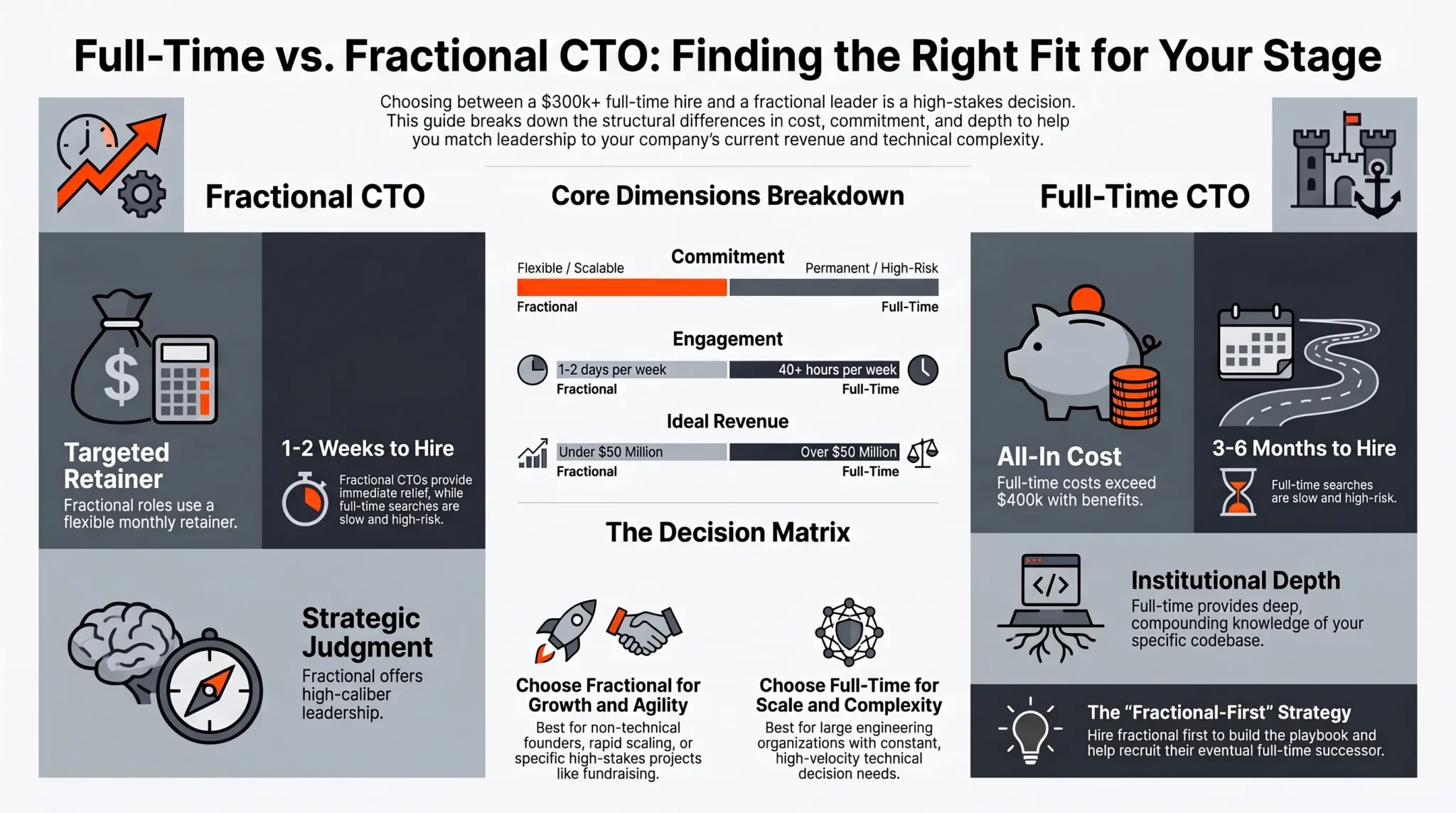
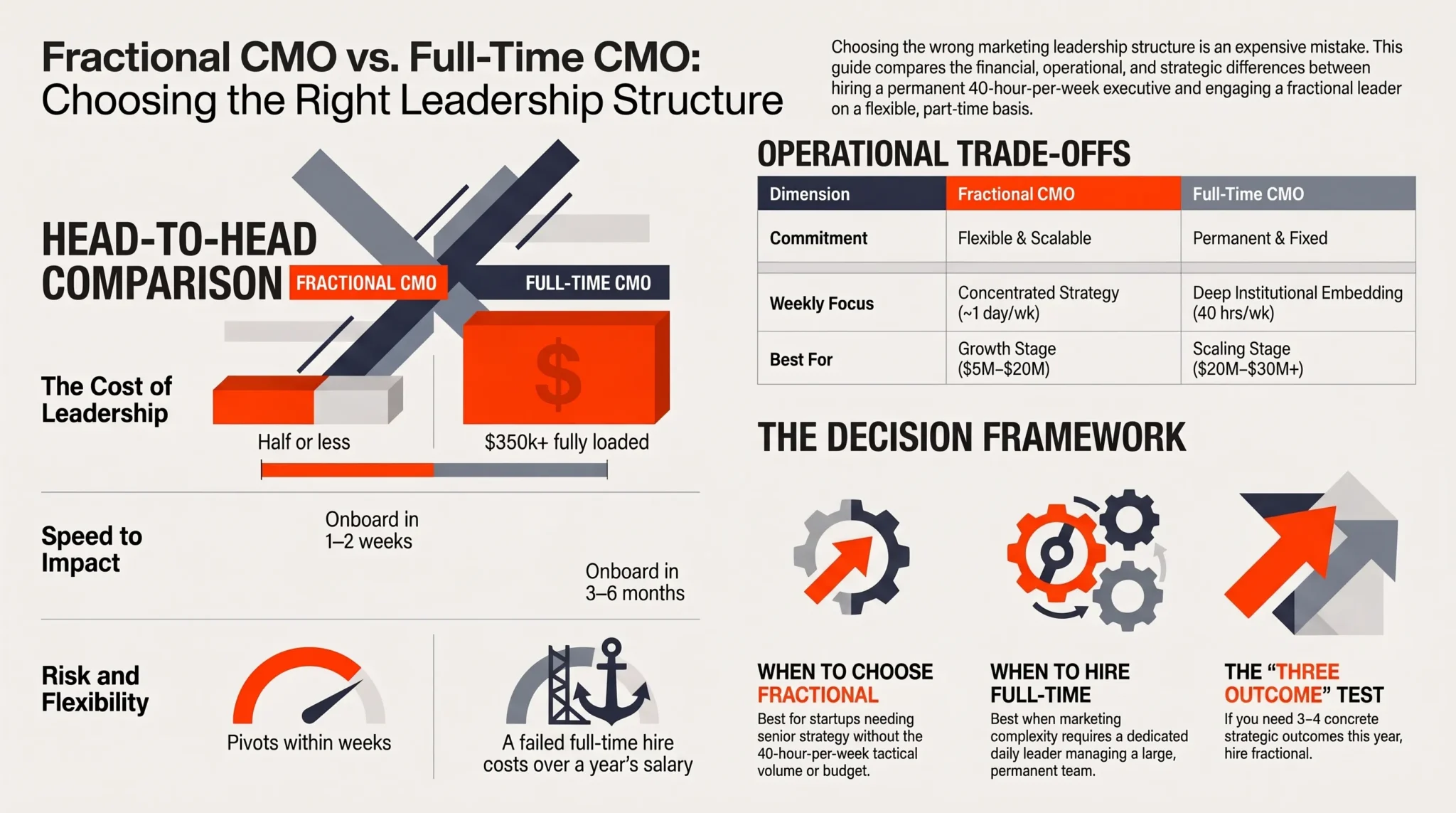
You can clearly see massive structural gaps in your strategy, operations, or finance departments, but you simply do not have the financial resources to fill those high-level roles with full-time, $250,000+ executives.
You inherently know you need elite senior talent. But every single time you explore the idea of hiring a fractional executive, you run into the exact same paralyzing fears.

As a founder, you are not entirely sure what you need them to do specifically. You worry that their involvement will be far too short-term, and you fear that they will treat your beloved business like just another casual client on their roster. Most of all, you lack the confidence that this outside expert will successfully integrate with your current team, your established culture, and your rapid pace of execution.
This creates what an article from First Round Capital described as a severe mismatch in expectations. The typical “anti-pattern” for founders is that they mistakenly treat fractional folks exactly like full-time executives. When this happens, the engagement inevitably fails. Suddenly, the fractional executive has absolutely no hours left to drive real business impact because all of their limited time is wasted merely gathering internal context.
This massive gap between what overwhelmed founders need and what traditional fractionals offer is your ultimate challenge—and your ultimate opportunity.
If you can successfully anticipate these founder concerns and proactively deliver reassurance, structure, and absolute clarity, you do not just become the leader they choose; you become the specific option they are thrilled to gamble on. The key shift is realizing that your job is not to prove you are “just as good” as a full-time executive. Your job is to definitively show that you are significantly more strategic, much faster, deeply plugged in, and entirely outcome-oriented.
When you show up as a leader who intimately understands the founder’s point of view, you pivot your entire business model from thinking, “I hope they are going to hire me,” to stating confidently, “Founders call me”. Here are the four core truths that founders secretly hold, and exactly how you must align with them to become the irresistible choice.

Truth 1: Founders Need Absolute Clarity, Not Just Capacity
Founders operate under an immense amount of daily pressure to scale up, and they are chronically overloaded. When they look for outside help, they do not just need another pair of hands to manage tasks; they desperately need someone who brings absolute focus.
The modern founder fully expects a fractional leader to hit the ground running the very first time they log in. If you are stepping into a company as a Fractional CEO or a Fractional COO, you absolutely must show that you understand their specific business model and the exact stage of growth they are currently navigating.
You cannot vaguely promise to “help out.” You must clearly articulate exactly where you will make a measurable impact within your first 90 days. They are looking for someone who will bring tangible deliverables to the table, not just someone who will bill them for their time. Clarity beats capacity every single time. You must arrive with a defined roadmap that immediately removes the cognitive load from the founder’s plate.
Truth 2: Founders Fear the Dilution of Culture and Speed
Bringing a fractional executive into the fold means introducing someone from the outside into a tight-knit ecosystem. Founders carry a very real fear that this new person will inadvertently slow them down, bloat their calendars with unnecessary meetings, or disrupt the fragile team culture they have worked so hard to build.
In fact, one of the single biggest challenges for fractional executives is failing to become fully integrated into the team when they join that first company.
To win the founder’s trust, you have to explicitly show them how you are going to integrate into their organization “lightly but deeply”. You must prove that you will become a seamless part of the team with a minimal ramp-up period, but with maximum action. Lean companies simply do not have the time to spend weeks onboarding the very leader they hired to fix their problems. You need to lead from day one . If you are a Fractional CTO entering a fast-paced tech startup in Seattle, you must assure the founder that you will respect their engineering culture while immediately accelerating their deployment speed.
Truth 3: Founders Want Installed Systems Over Advice
This is where the vast majority of consultants completely fail to make the transition into true fractional leadership. Founders do not just need a list of recommendations; they need concrete, functional systems.
Think about it this way: companies that proactively put their customers first are the ones that are most likely to succeed, and a fractional leader is a phenomenal option until the company is genuinely ready to hire a full-time executive. But to be that phenomenal option, your core offer must be: “I install the system, not just the plan”.
Founders have been burned by expensive consultants who hand over a 50-page slide deck and then walk away, leaving the exhausted internal team to figure out the execution. Most fractionals will give a founder reports; elite fractional executives will give them operational frameworks. You must position yourself as the architect and the builder. You are there to install a proprietary system that will permanently eradicate their operational chaos.
Truth 4: Founders Demand Predictable ROI, Not Just Hope
Startups and mid-market companies are operating with incredibly tight financial margins, intense investor pressure, and a runway that is constantly ticking down. They cannot afford to spend money on abstract “strategy.”
The fractional hire must be able to demonstrate measurable Return on Investment (ROI). You cannot sell hope; you must sell a guaranteed business outcome.
During your pitch, you must rigidly position your value by saying: “Here is exactly what we are going to deliver by month three, here is what your internal team will look like at that point, and here is exactly what this system frees up for you to do as the founder”. When you explicitly tie your fractional fee directly to the measurable financial or operational leverage you are creating for the business, the decision to hire you becomes a mathematical no-brainer rather than a risky expense.
The Blueprint: Building Your Founder-Facing Story
Now that we understand the four core truths, we have to apply them. To consistently win premium engagements, you must build what we call your “founder-facing story.” This is the exact script and positioning strategy that aligns your elite expertise directly with their deepest needs.
Here is exactly how you construct it:
1. Start With Their Pain You must validate their current reality. You say: “You are successfully scaling, but you are hitting severe operational bottlenecks. You cannot afford to hire a full-time executive right now, but you absolutely cannot keep operating with the status quo”.
2. Be Crystal Clear About Your Role Eliminate all ambiguity about what a fractional engagement actually looks like. You state: “I step in as a fractional leader for [X] amount of months. During that time, I will be explicitly installing these specific systems, and delivering these guaranteed outcomes”.
3. Set Rigid Expectations Give them a clear, time-bound container so they can visualize the finish line. You explain: “We will work in a structured 90-day sprint. We will hit defined milestones at months one, two, and three. By month four, we will sit down and figure out exactly where the company is going next”.
4. Show Your Integration Strategy Alleviate their fears about culture dilution and outside disruption. You assure them: “I will deeply embed into your company for 8 to 10 hours a week. I will show up in your leadership team meetings as if I am a full-time executive, and your internal team will see me as the true function owner, not just an external contractor”.
5. Package Your Proof Finally, you must back up your claims with undeniable, metric-driven evidence. Provide concrete examples of your past systems in action: “Company A scaled 2X in just 6 months utilizing my Fractional CMO framework,” or “Company B successfully cut their financial burn rate by 18% in exactly 90 days under my operational guidance”.
The Bottom Line: Be the Irresistible Choice
When you learn to speak the true language of the founder—leading with absolute clarity, proprietary systems, and predictable ROI—you naturally become the only logical choice in the market.
Here is what I want you to remember as you look to fill your pipeline this quarter: Founders are not just looking for help; they are looking for the right fit. They are not merely hiring talent; they are hiring deep trust. They are absolutely not paying for your time; they are exclusively paying for a business transformation.
If you show up to your next discovery call equipped with crystal-clear positioning, undeniable credibility, a heavy system orientation, and total alignment with their specific pressures, you will win the deal.
Fractional leadership is not just an operating model designed to give you freedom; it is a strategic lifeline built entirely for them. When you intentionally lead with the founder’s point of view, you systematically build your authority in the market. And when you build true authority, you permanently stop chasing clients, and you start magnetically attracting them.
Stop pitching your resume, and start pitching their transformation. Align with their reality, show them your systems, and become the irresistible fractional executive they have been desperately searching for.
Q&A
Question: Isn’t the main barrier budget? What actually stops founders from hiring fractional executives?
Answer: Cost is rarely the core issue. Founders hesitate because of a lack of clarity, context, and credibility. They’re unsure exactly what the fractional leader will do, fear a short, superficial engagement, and worry about cultural fit and speed. This creates an expectation mismatch: many founders mistakenly treat fractionals like full-time executives, which burns limited hours on internal context-gathering instead of outcomes. To overcome this, you must show up with precise scope, fast integration, and a direct line from your work to measurable business results.
Question: What are the four core truths founders hold—and how do I align with them?
Answer:
- Truth 1: They need absolute clarity, not just capacity. Arrive with a 90-day impact roadmap and specific deliverables.
- Truth 2: They fear culture dilution and slowdown. Integrate “lightly but deeply,” with minimal ramp and immediate action.
- Truth 3: They want installed systems over advice. Be the architect and the builder—deliver operating frameworks, not slide decks.
- Truth 4: They demand predictable ROI, not hope. Tie your fee to concrete outcomes by month three and the leverage created for the business.
Question: What is a “founder-facing story,” and how do I build one?
Answer: It’s a positioning script that maps your expertise to the founder’s lived reality. Build it by:
- Starting with their pain: validate their scaling bottlenecks and constraints.
- Being crystal clear about your role: time-bound engagement and the exact systems you’ll install.
- Setting rigid expectations: a structured 90-day sprint with monthly milestones and a month-four review.
- Showing your integration strategy: embed 8–10 hours/week, join leadership meetings, and act as the true function owner.
- Packaging proof: share metric-driven case studies that demonstrate your frameworks and results.
Question: How do I integrate “lightly but deeply” without slowing the team or disrupting culture?
Answer: Lead from day one with a small footprint and high leverage. Embed 8–10 hours per week, participate in leadership meetings, and take clear ownership of the function (e.g., as a Fractional CEO/COO/CTO). Respect existing norms while accelerating execution—keep meetings tight, skip lengthy onboarding, and focus on shipping the first critical wins quickly to earn trust and momentum.
Question: How do I prove predictable ROI and make the hire a “no-brainer”?
Answer: Convert your proposal into a math problem. Specify:
- The exact outcomes by month three (e.g., system installed, bottlenecks removed, speed metrics improved).
- The state of the internal team at that point (roles, cadence, capabilities).
- The leverage unlocked for the founder (time freed, burn reduced, revenue or margin impact).
- Support this with past metrics (e.g., 2x growth in six months using your CMO framework; 18% burn reduction in 90 days). When your fee is directly tied to these measurable gains, the decision shifts from risky expense to predictable investment.