The Mathematics Of Executive Value
There is a precise moment on every discovery call that makes even the most battle-tested corporate veteran sweat. You have spent forty-five minutes brilliantly diagnosing a founder’s strategic mess. You have mapped out the exact growth bottlenecks, exposed the gaps in their team, and outlined the operational playbook that will save their business. The founder is nodding eagerly, leaning into the screen, completely convinced that you are the exact leader they need.
Then comes the inevitable question: So, what is this going to cost us?
In that split second, a wave of old corporate insecurity crashes over you. You panic. You worry that if you state a big number, the founder will walk away. You worry that without a fancy corporate title backing you up, you do not have the right to charge executive fees. So you swallow hard and blurt out a safe, modest number. You quote an hourly rate of one hundred and fifty dollars, or suggest a soft five-thousand-dollar monthly retainer.
The founder accepts instantly without batting an eye.
In that moment, you might feel a brief flash of relief. You landed a deal. But three weeks later, as you find yourself working forty hours a week, managing chaotic vendor meetings, fixing operational breakdowns, and paying your own taxes and health insurance, the crushing reality sets in. You did not build a thriving executive practice. You lowballed yourself into an underpaid, high-stress contractor job where you are working at a massive financial loss compared to your old C-suite salary.
This silent tragedy plays out every single day across the independent market. Brilliant corporate leaders step out to launch a practice, only to realize they have no idea how fractional executives price their services. They guess at their rates, copy what other insecure freelancers are charging on LinkedIn, or anchor to old consulting rates that have zero relationship to the enterprise value they create.
Senior fractionals who have built sustainable, seven-figure practices do not guess. They charge two to three times more than the average operator for the exact same amount of time, and their clients happily pay it. They achieve this because they understand modern fractional leadership, operating with a math-backed formula for their floor, and a strategic positioning framework for their premium.
Here is the exact mathematical method and four-part lever system that every fractional executive must master to stop apologizing for their fees and start commanding what their work is actually worth.
The Math-Defensible Floor Formula: The Minimum You Can Charge
Before you can ever defend a premium price on a sales call, you must understand your absolute financial floor.
Your floor is not a target, and it is certainly not a goal. Your floor is the absolute minimum hourly equivalent rate that you must charge simply to break even and replace your former corporate compensation. If you charge anything below this floor, you are quietly paying out of your own pocket to work for your clients.
Most new operators make the fatal mistake of taking their old base salary, dividing it by two thousand hours, and calling that their hourly rate. If your base salary was two hundred thousand dollars, you might assume your rate is one hundred dollars an hour.
That math is dangerously flawed because base salary represents only a fraction of what your corporate job actually paid you.
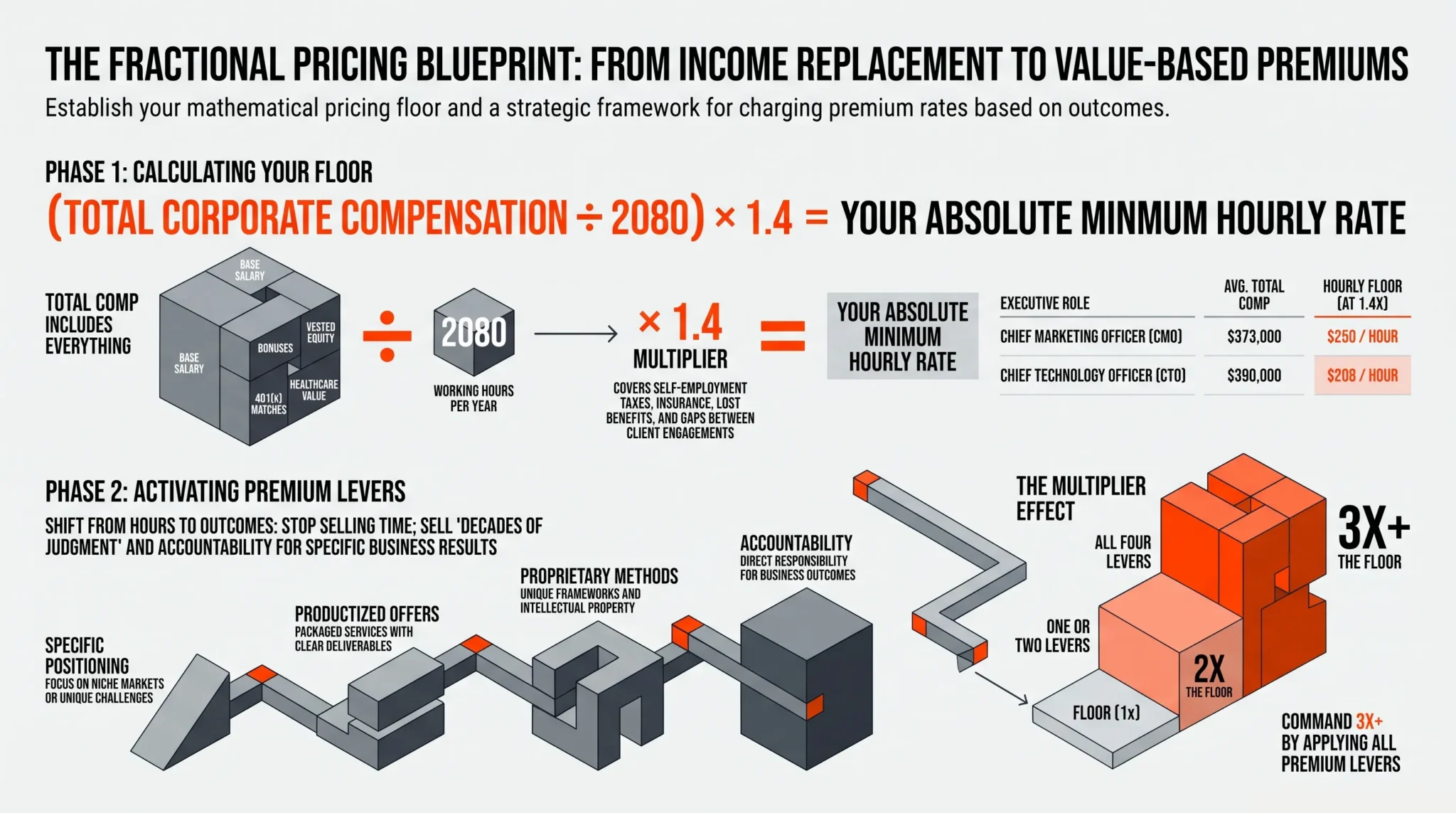
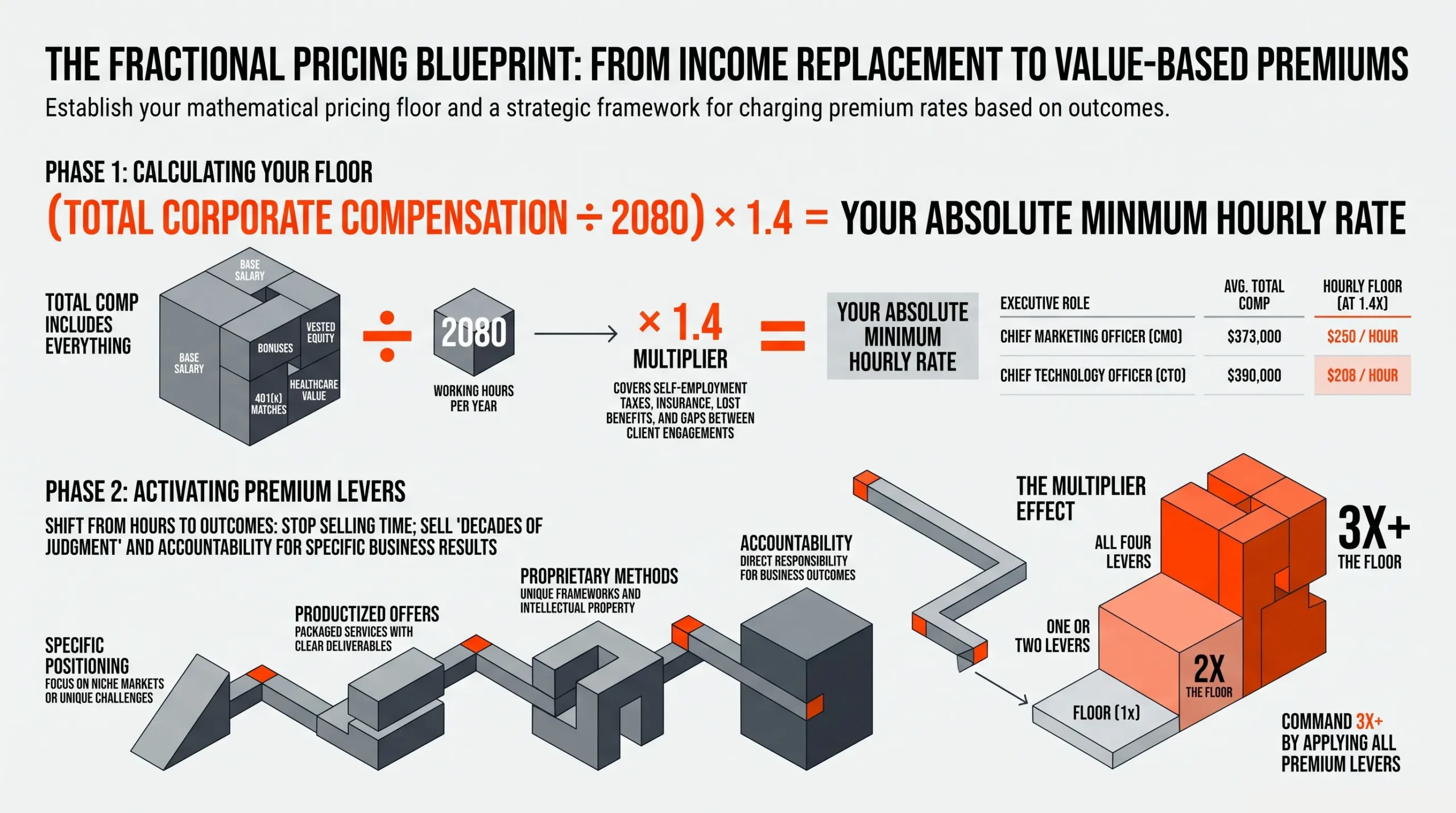
To calculate your true corporate compensation, you must add up your entire W-2 package. That includes your base salary, annual performance bonuses, the annual value of vested equity, employer health insurance contributions, employer four hundred and one K matching funds, professional development allowances, and the cash value of your paid time off.
When you leave corporate, every single one of those perks vanishes overnight. You no longer get paid when you take a two-week family vacation. You no longer have a corporate entity covering eighty percent of your health insurance premiums or matching your retirement savings. You are now responsible for paying both the employer and employee portions of self-employment payroll taxes. You must pay for your own professional liability insurance, software licenses, legal counsel, and administrative overhead. Most importantly, you must absorb every gap between client engagements without a safety net.
To account for everything you lose the day you step off the corporate payroll, you must apply the fractional multiplier.
Here is the exact formula:
First, calculate your Total Corporate Compensation Package. Add base, bonus, vested equity, health benefits, retirement match, and paid time off.
Second, divide that total compensation number by two thousand and eighty, which represents the standard full-time work hours in a year (forty hours per week multiplied by fifty-two weeks). This calculation gives you your true corporate hourly equivalent rate.
Third, multiply that hourly equivalent rate by one point four.
That one point four multiplier is your financial moat. It restores the forty percent of hidden equity, tax burden, benefit overhead, and unbilled operational risk that you absorb as an independent business owner.
The resulting number is your math-defensible floor. It is the lowest rate you can accept without taking an intentional pay cut.
Benchmarking The Floor: Fractional CMO And Fractional CTO Pricing
Let us look at how this math applies to real market benchmarks across major C-suite roles.
According to national compensation data from salary.com, the average total compensation package for a chief marketing officer in the United States is approximately three hundred and seventy-three thousand dollars per year.
Let us run the floor formula on that figure:
Three hundred and seventy-three thousand dollars divided by two thousand and eighty hours equals roughly one hundred and eighty dollars an hour.
Multiply one hundred and eighty dollars by one point four, and your financial floor comes out to exactly two hundred and fifty dollars an hour. This represents the baseline fractional CMO hourly rate required to make your corporate transition sustainable.
Now, let us translate that hourly floor into a standard monthly retainer for a fractional CMO engagement. A typical fractional commitment requires roughly forty hours per month, which equals about one dedicated day of strategic focus per week.
At forty hours per month multiplied by a two-hundred-and-fifty-dollar floor, the minimum retainer for a market-rate fractional CMO is ten thousand dollars per month per client.
If you are a marketing executive taking on fractional CMO clients for five thousand or six thousand dollars a month, you are not being competitive. You are quietly working at a severe loss compared to your former corporate earnings.
Now let us look at a chief technology officer. National benchmark data shows the average total compensation for a corporate CTO sits around three hundred and ninety thousand dollars per year.
Running the exact same formula:
Three hundred and ninety thousand dollars divided by two thousand and eighty hours equals roughly one hundred and eighty-seven dollars an hour.
Multiply that by one point four, and the financial floor for a fractional CTO comes out to roughly two hundred and eight dollars an hour, or approximately eight thousand three hundred dollars per month for a one-day-a-week retainer.
If your specific background is in a high-demand, specialized technical sector such as IT infrastructure, cybersecurity compliance, cloud architecture, or fintech, your baseline corporate comp is significantly higher, which pushes your floor up accordingly.
This formula is completely portable. You should never rely solely on national averages. Plug in your own honest, historical total compensation package to discover your personal, non-negotiable financial floor.

The Working Principle: Floor Vs Premium
Once you calculate your floor, you must internalize the most important principle in independent pricing:
The floor formula is your math. The premium multiplier is your positioning.
They are two entirely different concepts that serve two entirely different purposes.
The floor formula tells you what you need to earn to replace your past. It does not tell you what your expertise is worth to a client in the present.
Founders and CEOs do not hire a fractional executive because they want to buy forty hours of physical labor a month. They do not care about your time. They are hiring you to access decades of high-stakes pattern recognition, strategic judgment, and executive leadership that solves a painful, expensive business problem.
When a fractional leader steps into a chaotic mid-market company and fixes a broken sales funnel, restructures an underperforming engineering department, or installs a predictable go-to-market engine, they generate hundreds of thousands, or even millions, of dollars in enterprise value.
That enterprise value exists completely independent of the hours spent sitting at a desk.
This is why senior operators who understand fractional leadership do not stay at the floor. They use their positioning to stack a premium multiplier on top of their floor, charging two to three times their baseline numbers while delivering ten times the value.
The Four Levers Of Premium Pricing
To defensibly charge two to three times your baseline floor, you cannot simply demand higher fees because you want more money. You must build concrete, operational proof that justifies your pricing power.
There are four specific levers that allow you to command premium pricing without pushback on sales calls:
Lever One: Specific Positioning
The first lever is hyper-specific market positioning.
Generalists are forced to compete on price because they can easily be compared to every other generalist in the market. If you describe your business by saying, I am a strategic consultant who helps growth companies with marketing, you sit squarely at the financial floor. Every founder treats you like an interchangeable commodity.
A specialized operator who narrows their focus has zero direct competition.
Consider the difference when you position your practice with razor-sharp clarity: I help B2B software-as-a-service companies between five million and twenty million in annual revenue build their first repeatable demand generation engine.
Notice what happens immediately. You are no longer competing with generalist consultants. You have defined a specific buyer, a specific revenue stage, and a specific, high-value problem. When a software founder in that exact revenue band meets you, price comparisons vanish. They are no longer buying general advice; they are hiring the exact specialist who knows how to solve their specific bottleneck.
Lever Two: A Productized Offer
The second lever is packaging your knowledge into a productized offer.
When you sell custom advisory hours, you force the client to evaluate you by the clock. They scrutinize your timeline, audit your schedule, and compare your hourly rate to their internal salary scales.
A productized offer completely destroys time-based comparisons.
Instead of selling open-ended consulting hours, you package your executive process into a clearly named, rigidly scoped, outcome-focused engagement. You present a definitive product, such as a Ninety-Day Go-To-Market Diagnostic, a Series A Financial Infrastructure Blueprint, or an Executive Engineering Velocity Audit.
When you present a named, structured offer with a fixed scope and a flat fee, the conversation stops being about how many hours you work each week. The client is no longer evaluating your time; they are evaluating a structured product designed to deliver a specific result.
Lever Three: A Proprietary Method
The third lever is developing a proprietary framework or methodology.
Anyone can call themselves a fractional leader and offer general advice based on their past corporate career. But premium operators take their years of pattern recognition, document their unique process, and turn it into a visual, named system.
When you present a proprietary framework, you elevate yourself out of the general talent pool and into the role of an industry authority.
You are no longer just another fractional CMO giving opinions in meetings. You are the creator of the Fractional Operating System, or the developer of the Revenue Acceleration Architecture. You have a structured, visual roadmap that proves you have successfully navigated this terrain before.
A proprietary method gives prospective buyers immense confidence, clarity, and speed. It signals that you are not experimenting on their dime; you are executing a battle-tested system that produces predictable outcomes.
Lever Four: Accountability For An Outcome
The fourth lever is taking absolute ownership of a concrete business result.
Weak contractors hide behind vague promises of effort. They say things like, I will manage your marketing campaigns, or I will oversee your weekly leadership meetings. They take zero responsibility for whether those activities actually move the needle for the business.
Elite fractional executives price against outcomes, not activity.
They step onto a sales call and state clearly: At the end of our ninety-day engagement, your qualified pipeline will triple, or your sales cycle will shrink by thirty days, or your financial reporting structure will be completely audit-ready for your board.
When you attach your name and reputation to a measurable business outcome, the sales conversation changes instantly. The founder is no longer asking whether your ten-thousand-dollar or twenty-thousand-dollar monthly fee is expensive. They are asking whether tripling their sales pipeline is worth that investment. When the outcome delivers hundreds of thousands of dollars in new enterprise value, your premium fee becomes an absolute bargain.
The Premium Multiplier Matrix: Converting Levers Into Revenue
How do you translate these four levers into exact numbers on your proposal? You can use this practical working rule to calculate your fee multiplier:
If you have one or two levers solidly installed in your business, you can defensibly charge two times your math floor.
If you have all four levers fully integrated, hyper-specific positioning, a productized offer, a proprietary method, and outcome accountability, you can charge three times your floor, or even higher.
Let us apply this matrix to our fractional CMO pricing benchmark to see the real numbers:
As we calculated, the math-defensible floor for a fractional CMO sits at two hundred and fifty dollars an hour, or a ten-thousand-dollar flat monthly retainer.
At two times the floor, driven by strong positioning and a productized offer, your monthly retainer increases to twenty thousand dollars per month per client, or roughly three hundred and seventy-five dollars an hour equivalent.
At three times the floor, backed by a proprietary framework and complete outcome accountability, your monthly retainer scales to thirty thousand dollars per month per client, which equals roughly seven hundred and fifty dollars an hour.
To an insecure beginner, charging twenty thousand or thirty thousand dollars a month for a part-time engagement might sound absurdly aggressive. But let us look at the actual return on investment for the hiring company.
If a specialized fractional CMO comes into a scaling B2B business and triples their qualified sales pipeline over a six-month engagement, that outcome can easily add two million dollars in net-new annual recurring revenue to the company.
Paying a fractional leader twenty thousand dollars a month, or one hundred and twenty thousand dollars total over six months, to generate two million dollars in revenue is a massive financial win for the founder.
The premium fee is not something you unfairly extract from the client. It is a small fraction of the enterprise value you create, earned by being worth every single dollar.
How To Communicate Your Price On Sales Calls
Even when operators understand the math and build their levers, they often stumble during the actual sales conversation. They get nervous, drop their price too early, or let the client drag them back into an hourly discussion.
To maintain your authority and protect your pricing, you must follow a strict communication sequence.
First, never lead with an hourly rate or a price menu.
If a prospect asks you five minutes into a call what your hourly rate is, do not answer with a number. Shift the conversation back to scope and strategy. Say: I do not work on an hourly basis because hourly billing incentivizes slow work and penalizes efficiency. We work on a flat-monthly retainer structure tied directly to specific outcomes. Let us first determine if we are even looking at the same problem before we discuss the investment.
Second, attach your fee directly to the structured offer and the outcome.
When it is time to present your pricing near the end of the conversation, frame it as a complete engagement.
Use this exact phrasing: I work with B2B SaaS founders between five million and twenty million in revenue to build their first repeatable demand generation engine. The engagement is structured as a six-month strategic retainer at twenty thousand dollars per month, with the explicit outcome of tripling your qualified sales pipeline within ninety days.
Notice how the price is presented. It is introduced near the end of the pitch, wrapped inside a productized offer, and tied directly to a massive business result.
Third, if the prospect challenges your price, stand firm with math-backed confidence.
If a founder looks shocked and says, That feels expensive for a part-time commitment, do not panic and offer a quick discount. Calmly explain the reality of the market:
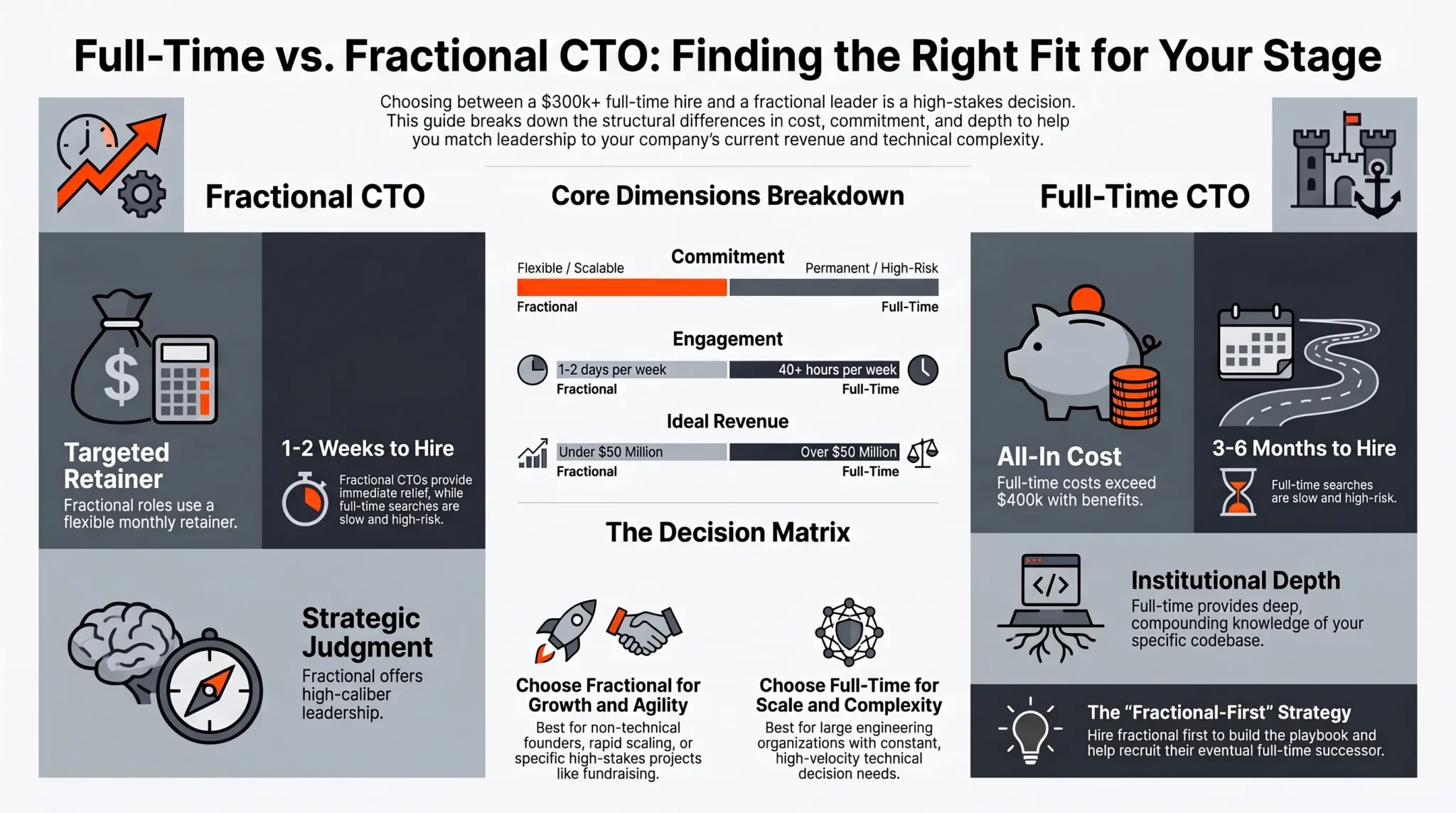
This investment represents what it costs to access battle-tested executive leadership without incurring the six-hundred-thousand-dollar annual expense, equity dilution, and long-term commitment of a full-time executive. More importantly, this fee reflects my full accountability for delivering a tripled pipeline, which will add over a million dollars in enterprise value to your company.
When you speak with that level of calm, math-backed conviction, you stop begging for work. You anchor yourself as an authoritative peer, and the founder recognizes that they are dealing with an elite operator who knows their worth.
The Bottom Line: Own Your Value And Charge For Outcomes
If you are ready to build a highly profitable, sustainable practice, stop treating your pricing like an embarrassing secret.
Calculate your honest, math-defensible floor so you never work at a loss. Then, systematically install the four levers into your business: narrow your positioning, productize your offers, build a proprietary framework, and own your client outcomes.
When you ground your fees in mathematical reality and position your value around business outcomes, you will never have to apologize for your rates again. You will step off the freelancer execution treadmill, command the respect of every founder you speak with, and build an independent career that pays you for the true value of your executive leadership.
FAQ: Everything You Need To Know About Fractional Pricing
Question: What is the single biggest pricing mistake corporate executives make when going fractional?
Answer: The biggest mistake is anchoring to an old base salary and dividing it by two thousand hours without accounting for benefits, payroll taxes, unbilled admin work, and business overhead. This causes new operators to charge hourly rates of seventy-five to one hundred dollars, which means they are quietly working at a severe loss compared to their former corporate income.
Question: What does a fractional CMO do, and how does the cost of hiring a fractional CMO compare to a full-time executive?
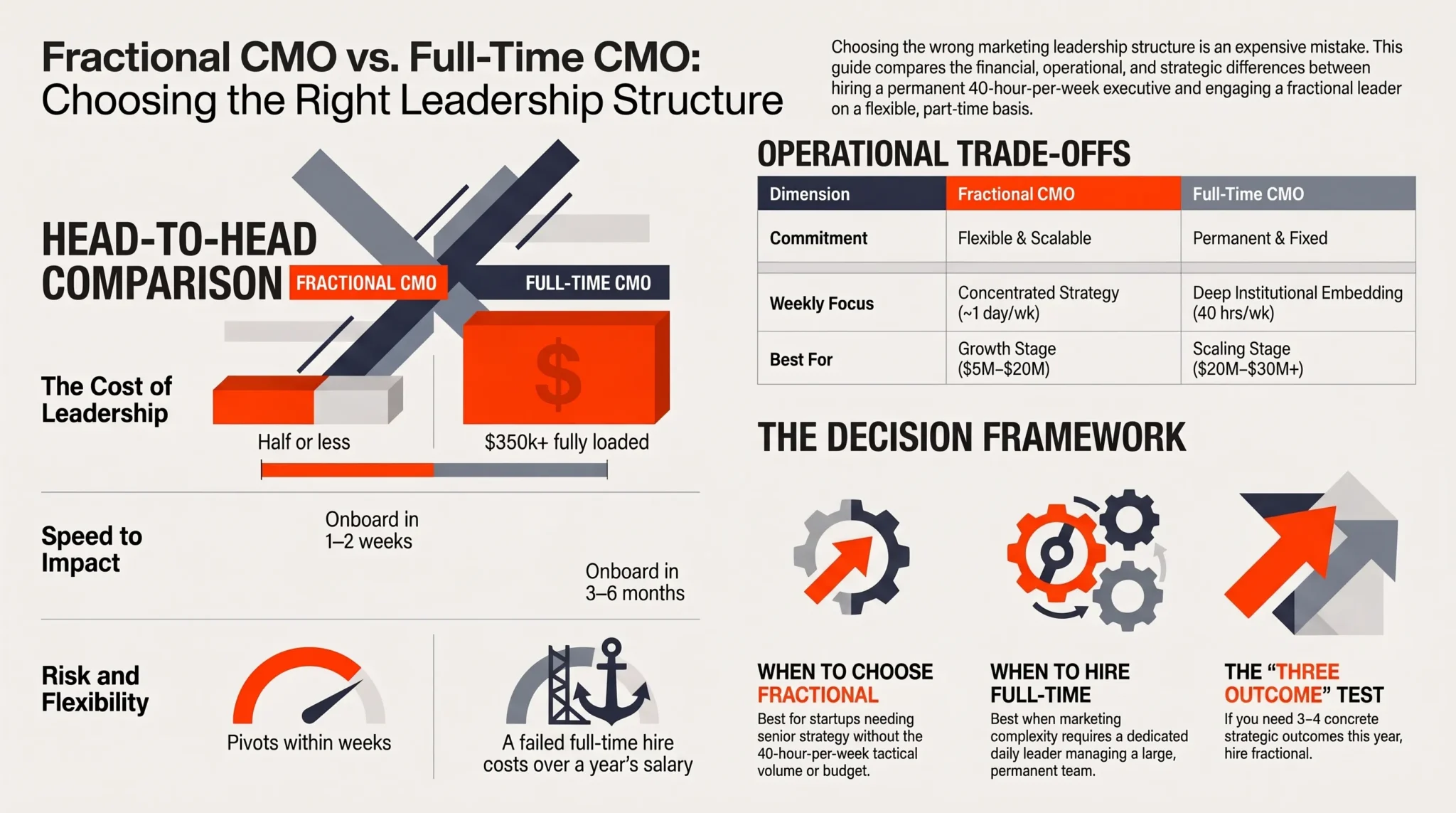
Answer: A fractional CMO is an embedded executive who joins a company on a part-time basis to build the marketing strategy, lead internal marketing teams, manage agency partners, and take full accountability for revenue and pipeline outcomes. The cost of hiring a fractional CMO typically ranges between ten thousand and twenty thousand dollars per month in flat retainers. By contrast, bringing on a full-time chief marketing officer costs between three hundred and fifty thousand and five hundred thousand dollars in total annual compensation, plus equity and severance liabilities, making fractional leadership far more cost-effective for growth-stage businesses.
Question: What is a typical fractional CMO hourly rate, and should I ever bill by the hour?
Answer: The math-defensible baseline for a fractional CMO hourly rate starts at two hundred and fifty dollars an hour, derived from replacing an average corporate total compensation package of three hundred and seventy-three thousand dollars. However, you should avoid billing clients by the hour. Hourly billing incentivizes inefficiency and commoditizes your expertise. Instead, use your hourly rate internally to establish your math floor, and quote clients a flat monthly retainer based on your fractional CMO pricing structure.
Question: What factors drive high-end fractional CMO pricing in today’s market?
Answer: High-end fractional CMO pricing is driven by hyper-specific positioning, productized offers, proprietary methodologies, and accountability for measurable business outcomes. Operators who possess all four levers can defensibly charge retainers of twenty thousand to thirty thousand dollars per month, representing two to three times their mathematical floor, because they deliver massive enterprise value that far outweighs their retainer fee.
Question: What should I do if a prospective client insists on paying an hourly rate instead of a monthly retainer?
Answer: You must firmly decline to bill by the hour. Explain to the founder that hourly billing creates a fundamental conflict of interest, where you are financially rewarded for taking longer to solve their problems. Position your flat monthly retainer as a benefit to them, ensuring complete cost predictability for their budget while allowing you to focus entirely on driving fast, high-impact business outcomes.
Question: Can I charge premium pricing if I am brand new to fractional executive work?
Answer: Yes, provided you have strong pattern recognition from your corporate career and you install the four levers in your practice. Your pricing power does not come from how many years you have been a fractional operator; it comes from your specific market positioning, your productized offers, your proprietary methodology, and your ability to take full accountability for a concrete business outcome.
Question: How many clients should a fractional CMO or CTO manage at one time?
Answer: Most successful fractional executives maintain between two and four active retainer clients at any given time. Managing three clients at a ten-thousand to twenty-thousand-dollar monthly retainer yields a highly lucrative, predictable business that generates thirty thousand to sixty thousand dollars in recurring monthly revenue while allowing you to maintain full control over your work-life balance.