If you have started asking around about how much does a fractional CMO cost, you have probably found a mess of answers. One person says $3,000 a month. Another says $15,000. A third gives you a fractional CMO hourly rate that makes your eyes water.
So what does a fractional CMO really cost? And how do you know if you are getting a fair deal or paying too much?
I talk with founders and CEOs every week who feel lost on pricing. They want a steady marketing and sales engine, but when they look at fractional CMO cost, they are often guessing.
Watch the Full Breakdown
I break down the real numbers, what’s actually included, and what a genuinely good deal looks like in the video above. Or keep reading.
1. Retainer vs. Hourly: Why the Clock Is the Wrong Metric
Let us start with the number you actually want.
Most true fractional CMOs work on a monthly retainer. In many cases, that retainer falls between $5,000 and $15,000 a month. The exact price depends on the scope of work and the stage of your company.
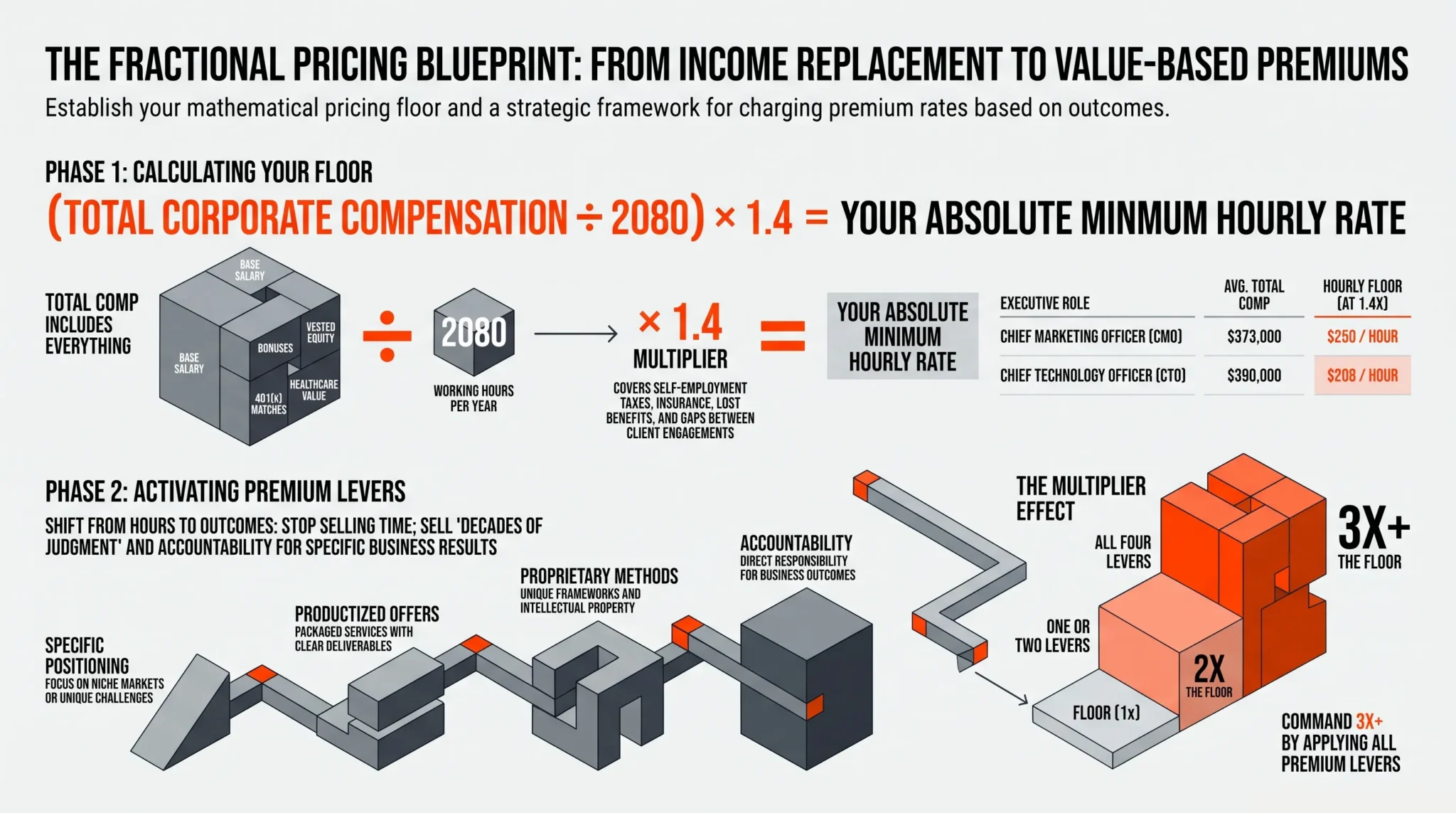
You may also see a fractional CMO hourly rate in the market. It often lands between $200 and $400 an hour. But the hourly rate is mostly a distraction.
A strong fractional executive is not selling hours. They are selling senior leadership, tested judgment, and growth results on a set retainer. If someone quotes only by the hour and watches the clock, that is a major red flag. You are likely hiring a contractor, not an executive.
When you ask how much does a fractional CMO cost, the honest answer is a monthly retainer, not an hourly number.
Three things move the price up or down inside that $5,000 to $15,000 range:
- Seniority and Track Record: A leader who has scaled several companies in your niche will charge more than a generalist, and they are often worth it. They charge more because their speed to value is much faster.
- Breadth of Scope: An executive who owns go-to-market, positioning, and sales alignment will cost more than one who only oversees one channel.
- Time Commitment: A half-day-a-week advisory role is not the same as two days a week of hands-on leadership.
If you want a true peer at your executive table, stop shopping for hourly rates and start paying for outcomes.

2. Total Cost: The Whole System, Not Just the Retainer
The monthly retainer is not the full cost of the engagement. If you budget that way, your plan will be off.
A fractional executive sets the plan and leads the work. They do not do every task themselves. They build the machine. They are not a cheap pair of rented hands.
The total cost of hiring a fractional CMO usually has four parts:
- The Strategic Leader: the monthly retainer for the executive mind.
- The Execution Layer: your in-house team or outside agency that handles daily work.
- The Campaign Budget: the money for ads and campaigns.
- The Tech Stack: the software and tools that run the system.
The good news is that a strong leader makes that spend more efficient. They keep you from wasting money on the wrong channels.
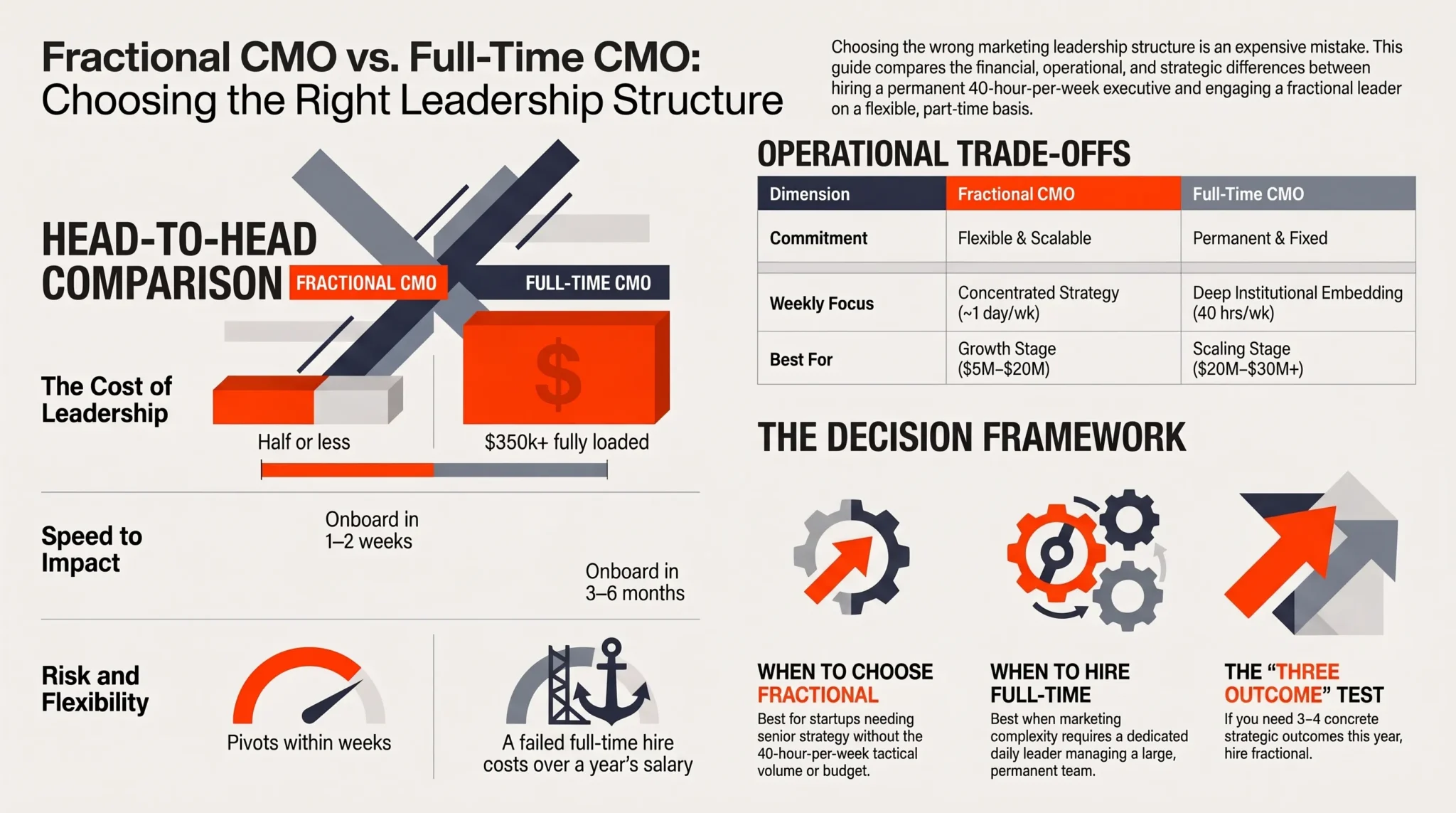
Founders often compare a fractional CMO retainer to a full-time CMO salary and forget the rest of the cost. A full-time CMO also needs a team, tools, and budget beneath them.
Always compare the whole system to the whole system. When you do, the fractional model looks very different.
A full-time CMO can easily cost $250,000 or more in salary alone. Add bonuses, equity, recruiting, and benefits, and the real cost can move closer to $300,000 a year. A fractional CMO gives you the same level of strategy for far less. That is why the model keeps growing in B2B.

3. What Does a Fractional CMO Do?
To judge the price, you need to know what does a fractional CMO do inside your business.
They are not a consultant who sits on the side, hands you a deck, and leaves. A true fractional CMO is an embedded leader. They are responsible for both the strategic architecture and the day-to-day leadership of your full marketing department.
Here is what they own:
- Strategic Architecture: They define your core position, map the customer journey, and build a multi-channel go-to-market plan that fits your revenue goals.
- Day-to-Day Leadership: They manage the marketing budget, simplify your tech stack, and set clear KPIs to track success.
- Team Management and Mentorship: They run weekly meetings, manage outside agencies, and coach junior staff.
- Board and C-Suite Alignment: They sit with the executive team and align marketing with sales and finance goals.
They are the main leader of the marketing team. The only real difference from a full-time executive is the number of hours they spend in your office.
4. Fractional CMO Pricing by Company Stage
To plan your year, you need to know how fractional CMO pricing changes by company stage.
These are starting ranges, not hard rules. Still, they give you a smart place to begin.
| Company Stage | Typical Revenue | Typical Monthly Retainer | Rough Annual Investment |
| Seed / Pre-Revenue | Under $5 Million | $3,000 – $6,000 | $36,000 – $72,000 |
| Growth Stage | $5 Million – $20 Million | $6,000 – $10,000 | $72,000 – $120,000 |
| Scaling Stage | $20 Million – $50 Million | $8,000 – $15,000+ | $96,000 – $180,000+ |
Seed / Pre-Revenue
At this early stage, you do not have a large team or a complex marketing department. You need a light-touch engagement, often a day a week or less of the executive’s time. The usual monthly retainer is $3,000 to $6,000, or $36,000 to $72,000 a year. The main job is to set your market position, find product-market fit, and build the first marketing roadmap.
Growth Stage
This is the sweet spot for the fractional model. At $5 million to $20 million in revenue, the stakes are much higher. Early organic growth has likely stalled, and you need a clear, scalable marketing engine. The scope is larger, and the typical retainer rises to $6,000 to $10,000 a month, or $72,000 to $120,000 a year.
Scaling Stage
For companies moving from $20 million toward $50 million, you need a heavier, hands-on strategic presence. You may have more product lines, longer sales cycles, and a larger team. At this level, the retainer often reaches $8,000 to $15,000+ a month, or $96,000 to $180,000+ a year.
5. Onboarding and Ramp: What to Expect in the First 60 Days
A common fear for founders is the onboarding period. You are paying a premium retainer, and you want quick results.
A strong fractional executive is fast, much faster than a traditional full-time hire who may need months to find their footing. But they are not instant, and you should be careful with anyone who says they are.
Weeks 1 to 4: The Diagnostic Phase
In the first month, the fractional CMO focuses on a deep review of your data, past campaigns, team, and customers. They study the numbers before they change the tactics.
Paying the full retainer in this phase is normal and correct. The executive who launches ad campaigns on day one, before learning the business, is the one who will waste your cash.
Weeks 5 to 8: The Strategy Phase
By day 30 to 60, the review turns into a written roadmap and visible action. You should get a go-to-market plan, clear KPIs, and early changes to your marketing channels.
Week 9 and Beyond: Accountable Results
By day 90, onboarding should be done. The plan should be in place, the team should be aligned, and the leader should be held to real, measurable results.
6. The Real Math: The Cost of Not Hiring
When founders see an $8,000 monthly retainer, they often flinch.
But the better question is this: What is it costing your business right now to run marketing with no senior strategy?
Think about the money you may be losing each month:
- Wasted Ad Spend: Money going to the wrong channels and the wrong buyers because tracking is weak.
- Inefficient Staffing: Junior marketers or agencies doing busywork because no one is guiding them.
- Stalled Growth: Launches that miss, campaigns that fail, and quarters lost because no senior leader is steering.
The real comparison is not “$8,000 versus zero”. It is “$8,000 versus the much bigger amount you are already losing each month”.
For many growing companies, hiring a fractional CMO is the cheaper move. If bad marketing wastes even $5,000 a month, that is $60,000 a year draining quietly from your bottom line.
7. A Simple Case Study: The $12 Million Company
Let us make this real. A $12 million company hired an embedded fractional CMO at $8,000 a month, or $96,000 a year.
On paper, $96,000 looks like a big line item. But the real math looked like this in the first quarter:
The Strategic Audit
In the first 30 days, the fractional CMO studied their marketing spend. They found that the company was spending $4,000 a month on two weak ad channels that were eating budget with no return.
The Optimization
The fractional CMO cut those two channels at once, saving the company $4,000 a month. That savings stayed in the business as pure profit.
The Refocus
The executive then met with the company’s two-person marketing team. Those junior employees were tired and spending hours on content with no plan. The fractional CMO refocused them on higher-value work.
The Result
By the end of the quarter, the team had built a targeted pipeline plan that lifted qualified leads by 30%.
Final math:
- Retainer Cost: $8,000 a month.
- Direct Waste Cut: $4,000 a month, or $48,000 a year.
- Net Strategic Cost: $4,000 a month, which was offset by the savings before you even count the 30% lift in leads.
The retainer did not add net cost. It moved money the company was already spending and turned it into growth they had not been capturing. That is what true fractional leadership delivers.
8. How to Choose a Fractional CMO and Avoid the Traps
The B2B market is full of people who say they offer fractional executive services. Because entry is easy, you need a clear way to choose a fractional CMO without getting burned.
A good deal is not the cheapest retainer. A $3,000-a-month fractional CMO who is really just a mid-level marketer with a big LinkedIn title can cost far more in lost time and wasted ad spend than an elite operator at triple the price.
Use this checklist to find a fair, high-value deal:
- A Clear Scope: You should know exactly what the executive owns and what they do not. There should be no doubt about their day-to-day boundaries.
- Deep, Relevant Seniority: They should have a real track record of scaling companies like yours, not just general experience.
- Outcomes Over Activities: The retainer should connect to a written roadmap and business results, not a list of tasks or hours.
- Built-In 90-Day Accountability: There should be a clear ramp and a formal 90-day review.
The Biggest Red Flag
The most dangerous red flag is a fractional CMO who cannot tell you what result they will own.
If their pitch is only about daily tasks, such as running campaigns, managing socials, and handling email, with no real number attached, you have not found an executive. You have found a contractor wearing an executive title. An executive owns the numbers. A contractor owns the tasks.
The Bottom Line: Move From Expense to Investment
Modern B2B growth has changed. The old org chart does not work well for many mid-market companies. Buying hours is a losing game. Buying real business change is the better path.
If your marketing feels chaotic, if your ad spend is not tracked, and if growth has stalled, you do not just have a tactics problem. You have a leadership gap.
Hiring a fractional marketing executive gives you the strategic brain you need to break through growth limits, without the bloated overhead of a full-time hire. It turns your marketing spend from a frustrating, unstable monthly expense into a strategic asset that keeps compounding.
Now that you understand the numbers, the structure, and the timing of the fractional model, the next step is to decide whether your company is ready.
I highly recommend watching my next video: Should I Hire a Fractional CMO? In that breakdown, I show the exact signs that say your business is ready, and the warnings that say it is not.
Stop letting your hard-earned capital drain away. Take control of your revenue engine, use the efficiency of the fractional model, and build the steady growth your business deserves.
Ready to see what a fair deal looks like for your company? Browse vetted fractional executives at hireafractional.com, free to start, no cost until you hire.

Frequently Asked Questions
Question: Why should not I just hire a full-time CMO?
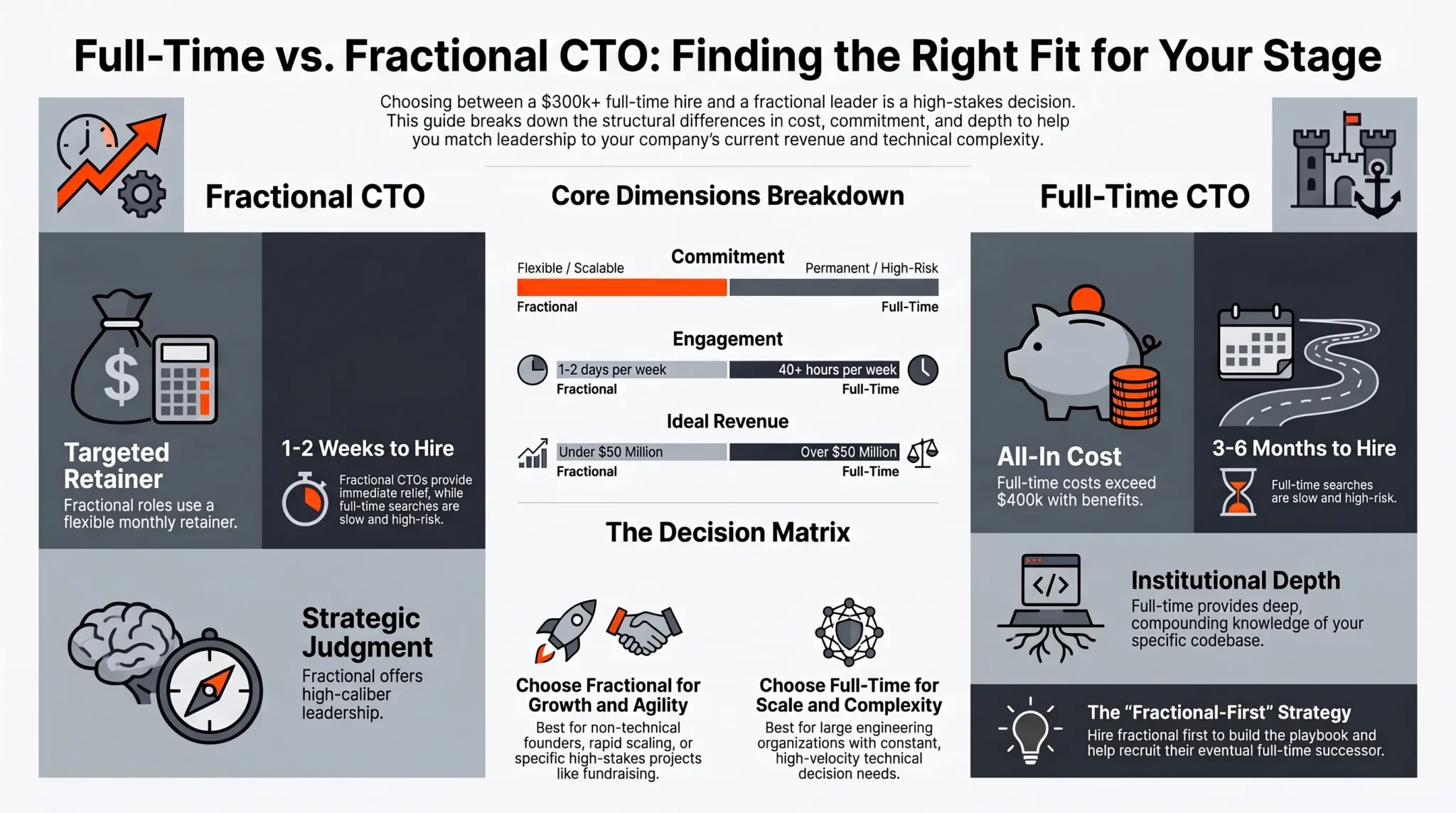
Answer: If your company is under $15 million in revenue, you probably do not have enough strategic work to keep a $250,000 full-time executive busy for 40 hours a week. You would pay a top salary for low-level tactical work. A fractional CMO gives you the strategy you need for about 10 hours a week and can save you over $150,000 a year in overhead.
Question: What is the difference between a consultant and a fractional CMO?
Answer: A consultant is an outside advisor who sells outputs, such as audits and slide decks. They tell you what to do and leave the work to your team. A fractional CMO is an embedded internal leader. They build the plan, run the meetings, manage the budget, lead the team, and own the result.
Question: How many days a week does a fractional CMO actually work?
Answer: It depends on the company stage and scope. Most deals range from half a day a week of advice to two full days a week of hands-on leadership.
Question: Is onboarding included in the monthly retainer?
Answer: Yes. The first 30 days are mostly diagnosis, and the monthly retainer covers that time. An elite executive must review your data, team, and customers before they build a plan.
Question: What if I already have a marketing agency? Do I still need a fractional CMO?
Answer: Yes, and your agency will likely thank you for it. Agencies are built to execute tactics, but they often struggle when the founder cannot give clear direction. A fractional CMO acts as the strategic bridge, manages the agency, sets KPIs, and makes sure the work fits your business goals.
Question: How long does a typical fractional CMO engagement last?
Answer: True fractional relationships are meant to be permanently part-time. They are medium- to long-term partnerships that often last from six months to several years, tied to your growth goals.
Question: What happens if we outgrow our fractional CMO?
Answer: That is a good sign. One of the main jobs of a fractional CMO is to build the marketing engine and coach your team until the company can support a full-time, W-2 executive. When that happens, your fractional CMO can help with the search and the handoff.