Why Calling Yourself a Consultant is Killing Your Pipeline (And How Fractional Executives Command Premium Fees)
Most incredibly talented professionals step out of the corporate C-suite and mistakenly believe there are only two ways to work independently as a leader: you are either a freelancer, or you are a consultant. But here is the harsh, undeniable truth that you must accept if you want to scale a real business: neither of those labels actually fits what elite, independent executives do.
Freelancers trade their dollars for hours, while consultants give high-level advice but rarely take any real responsibility for the execution. Neither of those outdated models reflects what is actually happening on the ground inside of rapidly scaling startups and lean, modern companies today. What today’s founders desperately need is not more business theory. They need tangible outcomes, they need rigid systems, and they need experienced operators who do not just recommend a strategy, but actually stay to build it. This is the practical heart of the fractional vs consultant distinction.
This represents a completely different operating model, and it is the absolute future of business leadership. You are not a freelancer. You are not a consultant. You are something significantly more valuable: you are a fractional executive.
If you want to build a thriving, highly predictable client pipeline across major global business hubs—whether you are targeting heavily-funded tech startups in Silicon Valley, expanding mid-market firms in Chicago, or established financial institutions in London—you must understand the profound difference between these labels. In this article, I am going to break down exactly why calling yourself a consultant slashes your market value in half, why the fractional category is exploding, and how you can position your expertise to command the premium fees you actually deserve.
The Identity Trap: Why Your Label Dictates Your Leverage
Here is the fundamental problem with calling yourself a freelancer or a consultant: you immediately get lumped in with every single generalist on LinkedIn who is offering vague “strategy” with absolutely zero systems to back it up. You stop being seen as a category leader and you immediately get treated like a highly replaceable commodity.
Let’s be brutally honest about how the modern B2B market views these titles. Most founders secretly see freelancers as mere task-doers. Simultaneously, they view most consultants as overpaid slide deck makers. Even if you personally do not see yourself that way, and even if your corporate resume is filled with massive, multi-million-dollar wins, that is the mental box founders automatically put you in.
Which is exactly why the minute you refer to yourself as a consultant, your perceived value gets slashed in half. Call yourself a consultant, and founders instantly assume you are selling PowerPoint slides, not guaranteed business outcomes.
Worse yet, these outdated labels trap you in the completely wrong business model. Freelancers constantly chase ad-hoc work. Consultants bill by the exhausting hour. Neither of these operational models provides you with the leverage, the revenue predictability, or the professional respect that your decades of experience warrant. That is exactly why even the most experienced independent leaders stay permanently stuck—underpaid, underutilized, and constantly having to explain their value to skeptical prospects instead of being instantly recognized for it.
The problem is not you, and it is certainly not a lack of skills. It is an identity trap. Fractional leadership is not simply a trendy new word for freelance consulting. It is an entirely different category with completely different expectations, economics, and value drivers.

What is a True Fractional Executive?
To escape this identity trap, we must clearly define what this new category actually is. A true fractional executive steps into a critical leadership gap, brings a rigidly defined proprietary system, and actively drives a highly specific business outcome. If you are wondering what is a fractional executive in practical terms, think of a permanent part-time leader who installs a proven operating system to deliver measurable results.
You do not just advise from the sidelines; you actively operate. You are embedded into the client’s company just enough to create massive organizational leverage, but you are not there on a full-time basis. The absolute truest definition of a fractional leader is “permanent part-time”. This is leadership on demand. It is strategic, high-level execution without the crippling burden of full-time executive overhead.
Fractional leaders do not merely give advice; they install outcomes. Fractionals do not charge by the hour; they charge for results. And most importantly, they are not competing with cheap freelancers. They are directly replacing full-time executives, doing the exact same high-level work but in a way that is smarter, faster, and significantly leaner for the company.
This is exactly why I constantly say: you are not a freelancer, you are not a consultant—you are a category of one.
The 5 Core Differences: Why Fractionals Dominate the Market

To truly own your value in the marketplace, you must understand the exact operational differences that separate you from the rest of the independent consulting market. Here are the five definitive reasons why fractionals are not consultants or freelancers, and why understanding this distinction will fundamentally change your business. This is the real-world lens on fractional vs consultant.
1. Consultants Sell Theories; Fractionals Install Systems
Most traditional consultants typically deliver slide decks. Fractionals, on the other hand, deliver results. Founders are exhausted by theory. They do not need another outside opinion telling them what is wrong with their business; they need a seasoned operator who will design the strategy, build the internal system, and then actually make it run. If you are handing over a deck of recommendations instead of actively installing functional systems into the business, you are not a fractional leader. You are a consultant. A fractional cto, for example, doesn’t just suggest a new tech stack—they actively oversee the architectural migration and install the engineering workflows required to maintain it.
2. Freelancers Get Tasked; Fractionals Get Trusted
Freelancers are hired to do. Fractionals are brought in to lead. When founders bring you into their organization, it is because they are stuck, and they are actively trusting you to create the clarity and the forward progress they are desperately looking for. Freelancers wait to be told what to do and simply follow orders. A true fractional executive sets the direction and leads the charge.
3. Consultants Stay External; Fractionals Embed
Most consultants are complete outsiders; they are never truly part of the internal team. Fractionals are temporarily internal. You join the company’s leadership rhythm, you take absolute ownership of your department, you help run key executive meetings, and you actively build cross-functional bridges across the organization. That embedded integration is what founders actually need. Fractionals are not on the outside giving passive advice; they are on the inside building actual momentum. A fractional ceo stepping into a turnaround situation in New York cannot advise from afar—they must embed themselves deeply into the company culture to steer the ship back to profitability.
4. Freelancers Sell Time; Fractionals Sell Outcomes
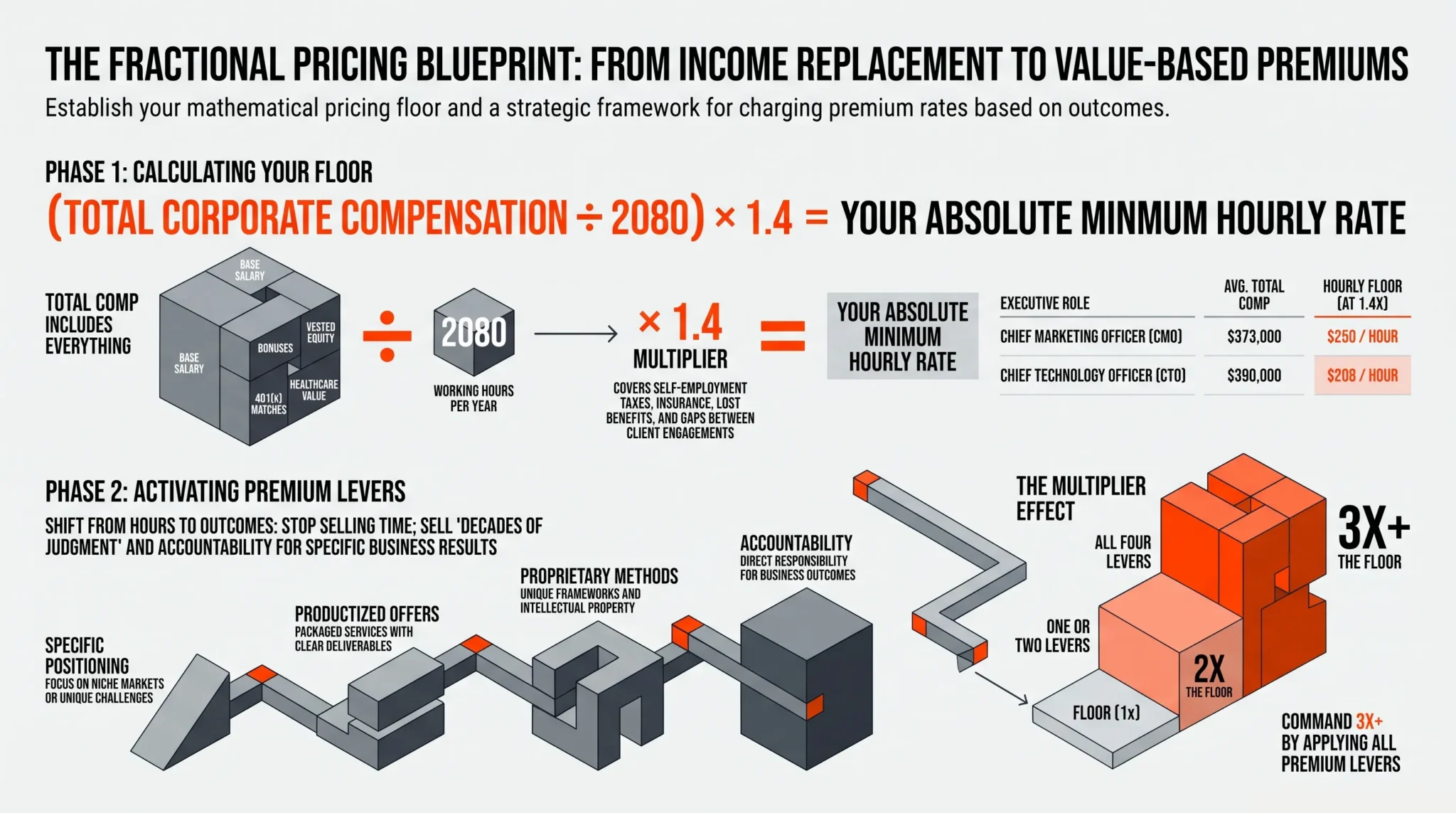
Freelancers bill their clients by the hour. Fractionals build value-based offers that are strictly tied to a measurable business transformation. This fundamental shift creates immense pricing power, unshakeable authority, and long-term client longevity. Your positioning is not about being the most affordable option; it is about being the most critical asset. The hard truth of the market is this: the more you charge for your time, the less you are actually worth. Fractionals completely ignore the clock and charge exclusively for the transformation and the outcomes they deliver.
5. Consultants Play Defense; Fractionals Play Offense
Consultants often find themselves playing defense, constantly being called in to clean up massive operational messes. Fractionals play offense; we build the infrastructure to prevent those messes from happening in the first place. You step into a company to optimize, to aggressively accelerate growth, or to stabilize fragile systems long before they actually break. This is proactive leadership, not reactive advice. A fractional coo operating in a fast-paced locations like Austin doesn’t just fix a broken supply chain—they proactively build the procurement systems necessary to support the company’s next $50 million in growth. Fractionals don’t just clean up messes; they prevent them entirely with installed systems.
Why Founders in Top Hubs Are Desperate for Fractional Leaders
So, why is the fractional category growing so incredibly fast across the globe? Because the modern founder is operating under immense pressure. They desperately need speed, they need absolute clarity, they need robust systems, and they need flexibility. But most of all, they need outcome certainty.
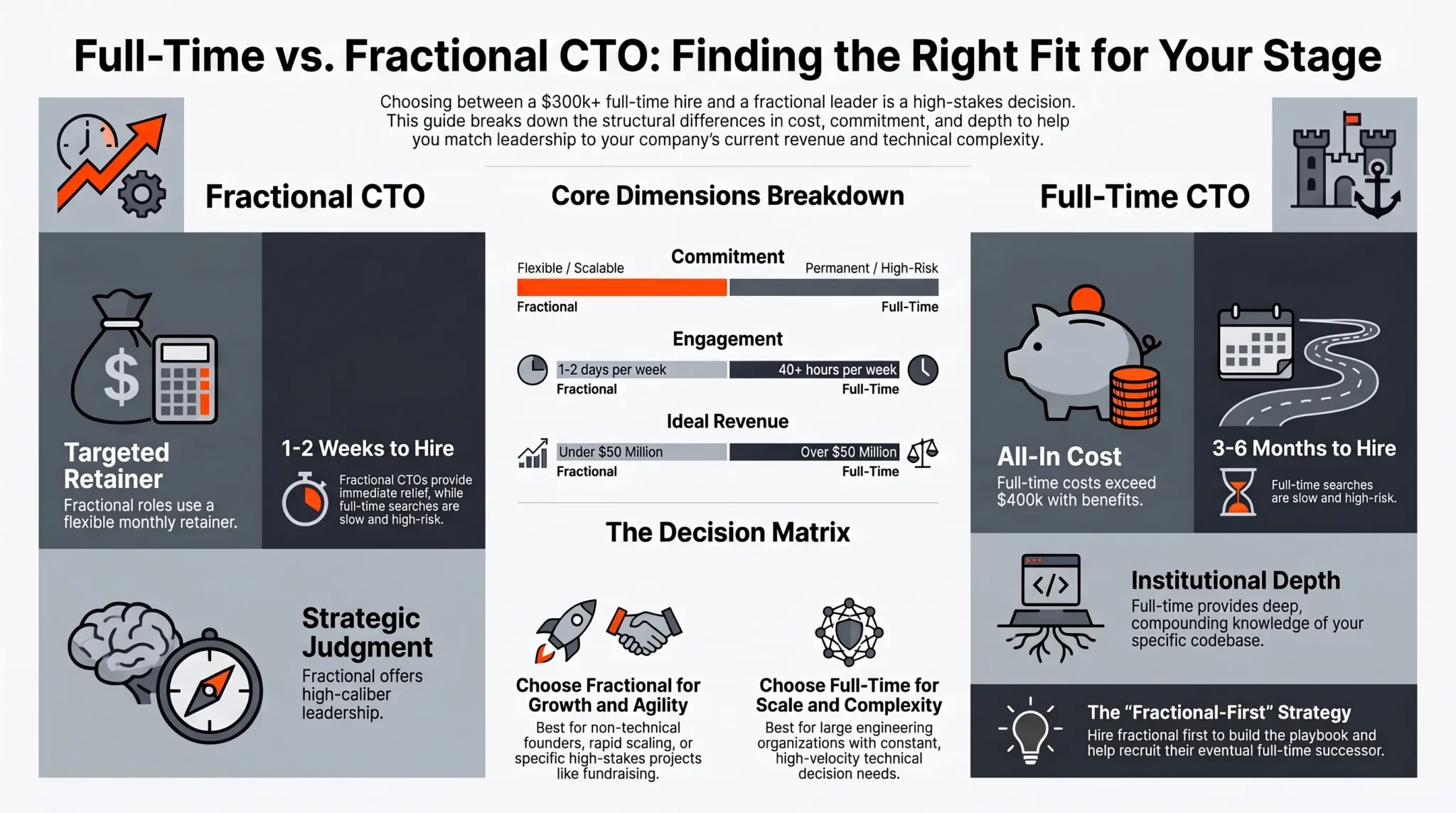
A highly skilled fractional executive delivers all five of those critical elements without forcing the company to hire a full-time executive, without suffering through a slow 90-day onboarding period, and without burning a massive $250,000 chunk of their salary budget. These are the tangible benefits of fractional leadership: faster implementation, lower risk, tighter feedback loops, and capital-efficient access to elite expertise, whether you need a fractional CFO, CMO, or operations leader.
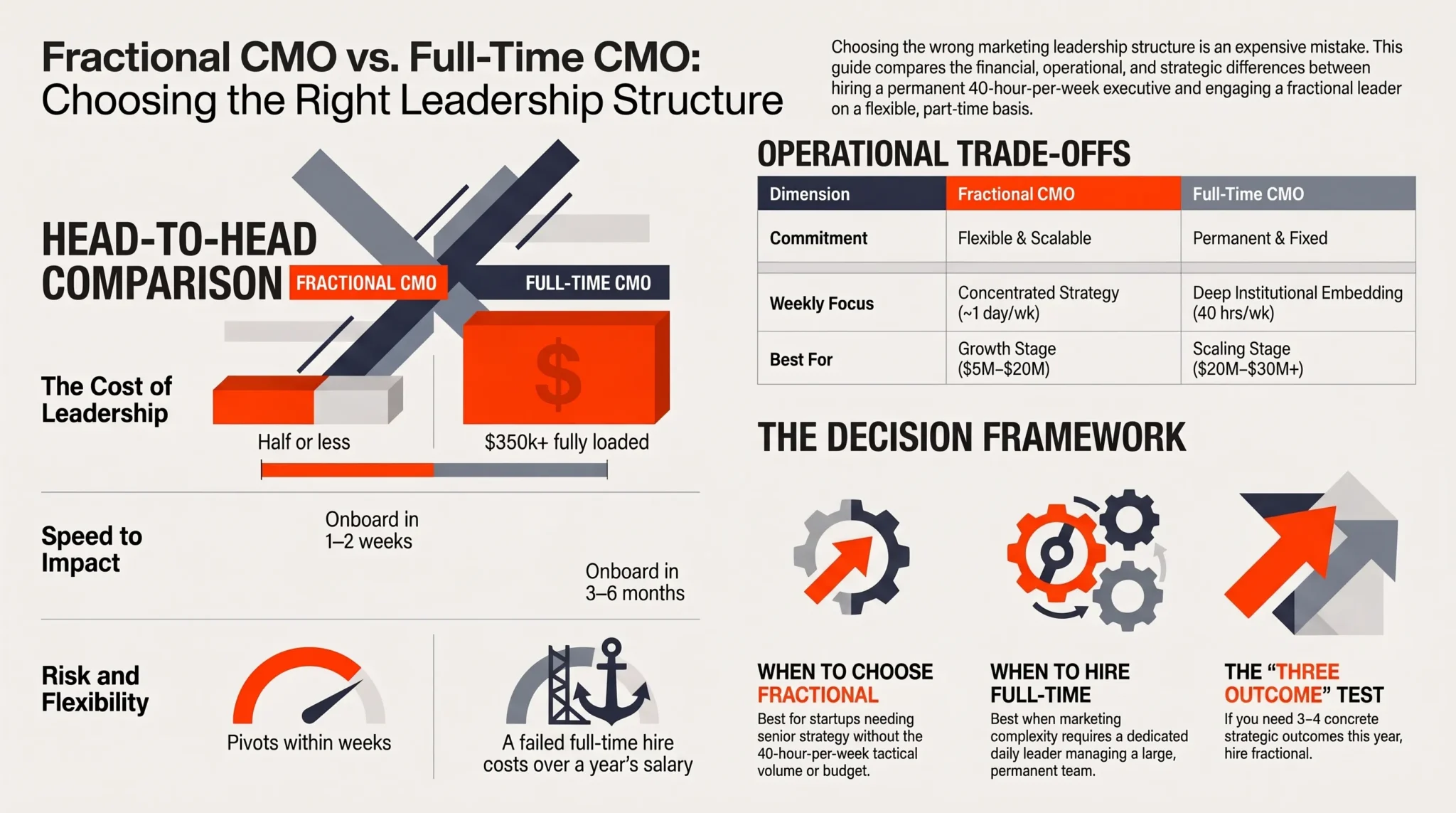
This undeniable economic reality is exactly why fractional CFOs are now fully expected in Series A tech companies in Silicon Valley. It is why fractional CMOs are stepping in to fill massive marketing gaps where a full-time hire simply cannot justify the ROI. It is why fractional operations leaders are increasingly being hired to build the structural foundation long before the company makes its first full-time ops hire.
The old, rigid labels simply cannot compete with this highly agile operating model anymore. Fractional leadership is exactly what founders actually want; they just do not always know what to call it yet.
The Bottom Line: Claim Your Category
Here is what all of this means for your future pipeline: if you are still positioning yourself in the market as a freelancer or a consultant, you are remaining completely invisible to the exact founders who need your help the most. They are not actively searching for freelancers, and they are not browsing the internet for general consultants.
They are asking their networks, “How do I find someone who can come in and help me build this? Who can install a system fast? Who has successfully done this before, but won’t cost me 300 grand a year?”.
That is the massive opportunity standing right in front of you. That is the specific category you belong in. Fractional work is not a fallback plan; it is the absolute future of corporate leadership. And the sooner you boldly claim that identity, the sooner the right, premium clients will start finding you. You are not selling yourself short; you are simply selling yourself wrong.
If this message hits home for you—if you have spent the last few months feeling misunderstood, miscategorized, or severely mispriced in the market—it is time for a permanent identity shift. Stop calling yourself a freelancer. Stop calling yourself a consultant. Start fully owning your role as a fractional executive, and begin building your business like one.
If you are ready to transition from a burnt-out consultant to a highly leveraged fractional founder, download the free Fractional OS starter kit. Inside, I will show you the exact foundational systems I use to help elite clients install their positioning, packaging, promotion, and pipeline. If you are exploring how to become a fractional executive, these tools will help you make that shift with clarity and speed. Stop trading your dollars for hours, and start building the scalable, high-value fractional practice you actually deserve.
Q&A
Question: What exactly is a fractional executive, in practical terms?
Answer: A fractional executive is a permanent part-time leader who steps into a critical gap, embeds with the company’s leadership rhythm, and installs a proven operating system to deliver specific, measurable outcomes. Unlike consultants who advise from the outside or freelancers who complete tasks for hours, fractionals actively operate, own a function just enough to create leverage, and charge for results—not time—often replacing the need for a full-time executive.
Question: Why does calling myself a consultant hurt my pipeline and pricing power?
Answer: The “consultant” label drops you into a crowded bucket of generalists founders associate with slide decks and vague strategy—so your perceived value gets slashed. It also locks you into weak operational models (hourly billing, ad-hoc work) that undermine leverage and predictability. By contrast, positioning as a fractional executive communicates embedded leadership, installed systems, and outcome ownership—shifting you from commodity to category leader with premium, value-based pricing.
Question: What are the core differences between a consultant/freelancer and a fractional executive?
Answer: Five operational shifts define the fractional model:
- Consultants sell theories; fractionals install systems and make them run.
- Freelancers get tasked; fractionals get trusted to lead and set direction.
- Consultants stay external; fractionals embed and own the function internally.
- Freelancers sell time; fractionals sell outcomes tied to measurable transformation.
- Consultants play defense (fix messes); fractionals play offense (build infrastructure to prevent them).
Question: How should a fractional executive structure and price engagements?
Answer: Ditch hourly billing and build value-based offers tied to clear, measurable business outcomes. Operate as “permanent part-time”: embed with the leadership team, take ownership of a department, design the strategy, install the operating system, and ensure it runs. Your positioning isn’t about being the cheapest—it’s about being the most critical asset for achieving a defined transformation.
Question: Why are founders in top hubs actively seeking fractional leaders—and when does hiring one make sense?
Answer: Founders need speed, clarity, robust systems, flexibility, and outcome certainty—without the cost, risk, and slow ramp of a full-time executive. Fractionals deliver faster implementation, tighter feedback loops, and capital-efficient access to elite expertise. That’s why Series A companies expect fractional CFOs, why fractional CMOs fill marketing gaps where a full-time ROI isn’t justified, and why fractional ops leaders build foundations before the first full-time ops hire. If a company needs executive-level outcomes now—without $250k+ overhead and lengthy onboarding—a fractional is the right fit.
Question: I’m a burned-out consultant—how do I transition to a fractional executive model?
Answer: Make a permanent identity shift: define a rigid, proprietary system that reliably installs outcomes; reposition your offers around specific transformations; package and price for value (not hours); and build a pipeline that targets founders seeking embedded leadership. Tools like a “Fractional OS” can help you operationalize positioning, packaging, promotion, and pipeline so you stop trading time for money and start running a scalable, high-value fractional practice.